

On Friday, November 13, 2026, air travel in the United States stopped. The Federal Aviation Administration issued a rare nationwide ground stop — no departing domestic flights — after a telecommunications failure in its air traffic control network. The stop lasted more than four hours, was lifted that evening, and left airlines untangling schedules for days. About 12,462 flights were cancelled that day.
Thousands of stranded passengers did the same thing at the same time: they went looking for a rental car. And within hours, there were none to be had.
The rental car rush
At Atlanta’s Hartsfield-Jackson airport, reporters checked eight rental car companies shortly before 6 p.m. on November 13. None had a vehicle available. In Salt Lake City, Enterprise, National, and Alamo had exhausted their fleets that Friday evening. A traveler diverted to Wichita paid about $648 for a short rental. Rideshare quotes for stranded groups ran $1,300 to $1,700 — one driver quoted $2,700. A traveler flying Florida to Boston ended up renting a car with friends and driving about 22 hours; the rental cost about $2,000.
That is the pattern in every system-wide disruption: the obvious backup gets overwhelmed first, because everyone reaches for it at once.
The fleet most travelers forgot
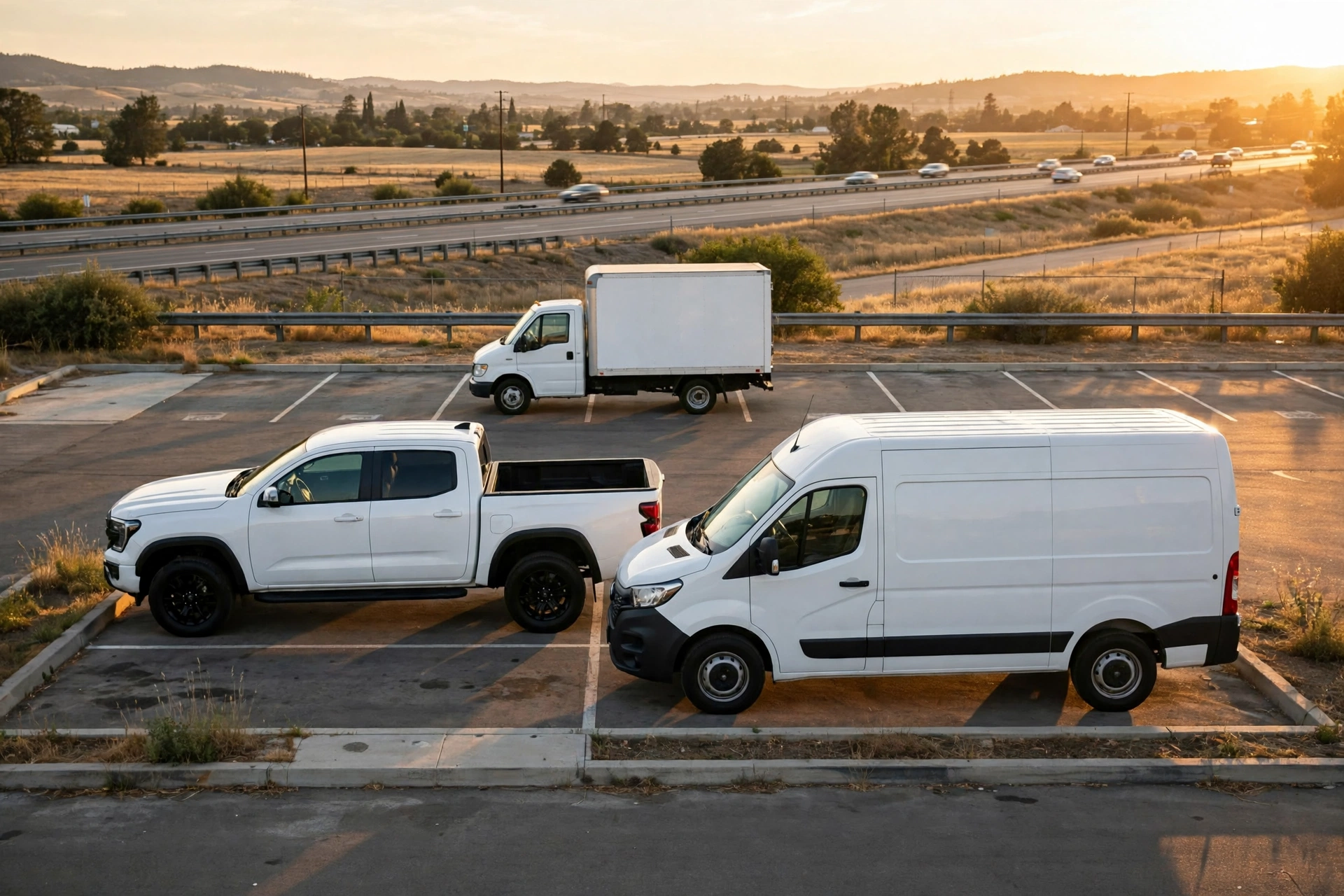
While airport rental counters were empty, another fleet was sitting a few miles away, mostly untouched: U-Haul. Most people think of U-Haul as moving trucks. They forget it also rents regular vehicles — an 8-foot pickup truck and a 9-foot cargo van, both starting at $19.95 a day for a local rental, plus mileage, fuel, taxes, and any coverage you add.
That matters for two reasons. First, U-Haul has more than 25,000 locations, many of them neighborhood stores nowhere near an airport — so they don’t sell out the moment an airport does. Second, a pickup or a cargo van is a real vehicle for real people: four or five seats, room for luggage in the bed or the cargo box, and a normal driver’s license is all you need.
The catch you have to know
Here is the part that trips people up: U-Haul pickups and cargo vans are in-town rentals. You pick one up and return it to the same location. They are not offered as one-way, cross-country rentals. If your plan is to drive 1,200 miles home and drop the vehicle there, a pickup won’t do it.
For a true one-way drive, the answer is the next size up: the 10-foot (and larger) box trucks, which U-Haul does rent one-way, with a flat route quote that includes a set number of days and miles. That is exactly what one stranded traveler did on November 13 — Greg Swan, visiting Austin from Minneapolis, rented a 10-foot U-Haul box truck in South Austin for about $1,200 and drove 1,200 miles across six states in 21 hours to get home to his children.
So the rule is simple: pickup or cargo van for a short hop — to a hotel, to a different airport, to a nearby city where flights are still moving. Box truck for the long one-way drive home. And in both cases, remember the $19.95 is the starting daily charge, not the total — mileage, fuel, and fees are on top, so get the full quote before you commit.
The preparedness lesson: a backup plan isn’t a backup if everyone else has the same one. The travelers who got home on November 13 weren’t the ones who refreshed the airline app the longest — they were the ones who had a second option ready that nobody else was thinking about.
Your Plan B checklist for the next ground stop
- Before you fly, save two off-airport options. The nearest U-Haul location and the nearest off-airport rental branch to both your departure and arrival airports. Airport counters sell out first.
- Know the in-town rule. Pickup and cargo van: same-store return. One-way cross-country: 10-foot box truck or larger. Pick the vehicle that matches the trip.
- Price the whole trip, not the headline. $19.95 a day is the base. Add mileage (often around $0.59–$0.99 a mile locally), fuel, taxes, and coverage — and compare it against waiting for the next flight.
- Know your refund rights. If the airline cancels your flight and you don’t accept a rebooking or travel credit, you generally qualify for a refund of the unused ticket. That doesn’t automatically cover a rental car — so don’t assume it will.
- Travel with a go-bag mindset. Phone charger, water, a change of clothes, and your ID and cards in your carry-on — not in a checked bag you can’t reach when plans change.
- Keep a roadside kit in the trunk. Jumper cables, a tire inflator, a flashlight, and a first aid kit turn a long wait by the road into a manageable one — the Everlit Survival Car Emergency Kit packs all of them into one bag.
Disruptions don’t announce themselves. The November 13 ground stop lasted four hours; the scramble it caused lasted days. The people who got home fastest weren’t lucky — they were the ones with a Plan B they’d already thought through.
Go Heroes equips veterans, first responders, and mission-driven organizations with emergency preparedness, leadership development, and operational support. Our hero programs are free to veterans and first responders, funded by donations.
Sources: FAA nationwide ground stop, November 13, 2026, and rental car shortages — Travel and Tour World; Austin disruption and the U-Haul box truck drive home — Texas Capital News; Charlotte travelers and rental availability — New York Post; Boston recovery and rental costs — Vibrant Gateways. U-Haul pickup and cargo van rates ($19.95/day base, in-town) and one-way rules — MoveBuddha and This Old House. Prices vary by location and date — confirm your quote at uhaul.com before booking.
Disclosure: As an Amazon Associate, Go Heroes earns from qualifying purchases made through links on this page, at no extra cost to you.